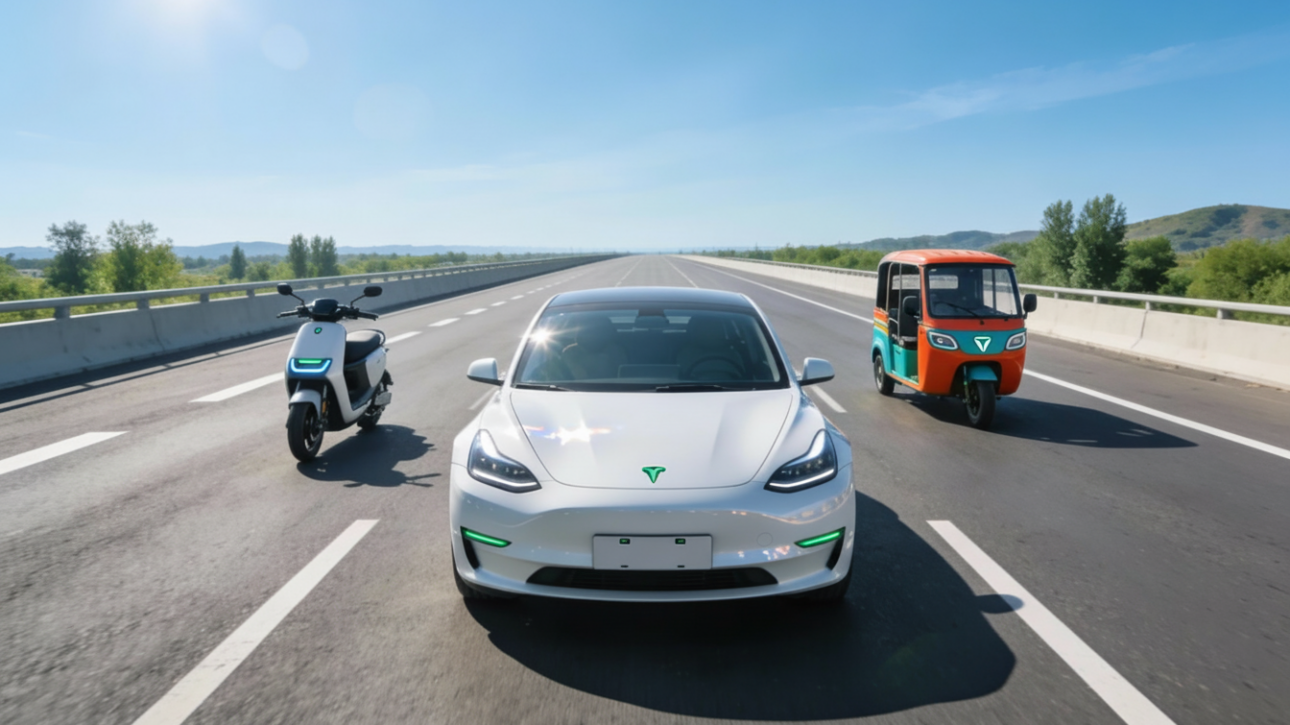
Nigeria stands on the brink of a transportation revolution. With over 230 million people and an estimated 12 million vehicles on its roads, nearly all powered by internal combustion engines (ICE), the environmental, economic, and public health costs of fossil fuel dependency are becoming increasingly unsustainable. According to data presented in Dr. Lawal Y. Gada’s…
Abstract
The transition to electric mobility (e-mobility) presents significant economic, environmental, and social opportunities for Nigeria. As the country seeks to reduce its dependence on fossil fuels and cut greenhouse gas emissions, e-mobility emerges as a key solution for sustainable transportation. However, despite its potential, women remain significantly underrepresented in this sector due to a…
A Comprehensive Analysis of the Environmental Impact of EVs vs. ICE Vehicles
INTRODUCTION
The global transition to electric mobility represents one of the most significant technological and environmental shifts of the 21st century. With transportation accounting for 24% of global CO₂ emissions (IEA, 2023), electrification is widely regarded as a critical strategy for decarbonization. Governments worldwide are implementing policies…
Executive Summary
Nigeria is on the cusp of a transformative shift towards electric mobility, a transition driven by a forward-looking government, proactive private sector investment, and the economic imperative stemming from recent fuel subsidy removals. This strategic reorientation is not merely an environmental imperative to reduce greenhouse gas emissions and reliance on fossil fuels, but it…
Executive Summary
Nigeria stands at a pivotal juncture in its pursuit of sustainable transportation, driven by ambitious commitments to transition towards electric mobility. Despite a clear national vision for zero-emission vehicles (ZEVs) and a burgeoning local manufacturing presence, the importation of electric vehicles (EVs), encompassing 2, 3, and 4-wheelers, faces significant impediments within the operational…